
Godspeed and the Vocabulary of Departure in Streetwear Identity
Every era of clothing borrows its vocabulary from the past, and streetwear has long depended on words that carry weight beyond their character length. The word Godspeed is one of those words. It persists on tags, across chestprints, and inside brand names precisely because it contains centuries of meaning inside four syllables. When a label chooses a word like this, it is not decoration. It functions as a message about what the garment is supposed to say when the person can’t.
This piece explores where the word originates, what it means in the present day, and why a brand shaped by farewell, protection, and moving ahead connects with people browsing for a godspeed shirt or a godspeed hoodie in 2026. Along the way we’ll untangle folklore from its linguistic origins and compare how different clothing categories carry that meaning.
Godspeed: What’s Really Behind the Word?
Godspeed meaning has its roots in Middle English, specifically the phrase “God spede you,” which literally translates to “may God prosper you.” Speed in this more archaic sense had no relation to velocity. It denoted success, fortune, or a favorable outcome. So when someone said godspeed to a traveler in the 1300s, they weren’t wishing them a fast trip — instead they hoped for a successful one.
Over the following centuries the phrase compressed into a single word and took on new usage. By the 16th and 17th centuries, English sailors and soldiers used it as a send-off before perilous journeys or battles. It carried an undertone that the person leaving may never make it home, so the blessing had to do real work. Four hundred years on, that weight is exactly why the word still hits hard.
Today, what is godspeed to most people is a parting expression set aside for meaningful departures — not a casual “see you later” but something more akin to “I hope this goes well and I hope you come https://godspeedofficial.org/ back.” NASA used it before Mercury and Apollo launches. Musicians use it in album titles and lyrics tied to loss or departure. That thread — travel, risk, hope, return — is the very emotional space that clothing brands are tapping into when they print the word across fabric.
The Match Between the Word and a Apparel Brand
Apparel labels thrive when their name or message does more than label an item; it has to convey an attitude the wearer wants to embody. God speed clothing fills a specific lane: it expresses resilience, motion, and quiet defiance in the face of unpredictability. That’s a different emotional register than a slogan built around aggression or status signaling. Introspection comes first here, aspiration second.
On top of that, there’s an aesthetic edge. The word godspeed has strong typographic bones — it works nicely whether stacked across a chest or back panel. Designers drawn to streetwear and gothic-tinged looks gravitate toward words that evoke an old-world feel given that they photograph well against weathered textiles, oversized cuts, and black-and-white palettes.
Beyond aesthetics, the word does narrative work for a whole clothing collection. Themes like departure, amulet imagery, highway-themed symbols, and memorial-style graphics can all surface within a single clothing drop, and the word godspeed quietly unifies them without needing to be spelled out. Customers pick up on that cohesion even if the reasoning stays unspoken — the tees seem to share a single unfolding tale.
Godspeed Shirts set against Godspeed Hoodies: Figuring Out Where the Message Lands Best
Depending on the garment, the impact varies, and godspeed-branded pieces fitting this rule. A godspeed tee tends to work as a focal piece — more lightweight, less concealed, frequently worn during hotter seasons or tucked under outerwear letting the graphic show. The godspeed hoodie feels more substantial on the body; that hood element holds a deeper significance, evoking journeying, facelessness, and safeguarding, which complements the term’s undertones of danger and safe travel.
The way the graphic reads is also altered by silhouette along with the weight of the fabric. Graphic type picks up more depth because thicker cotton hoodies hold ink and puff prints more effectively. Delicate-line or faded, vintage-style graphics are best suited to softer shirt fabrics, feeling more like a gentle, worn-in mark than a loud statement. Neither option is inherently “better” — they just serve different wardrobe roles.
What follows examines how these two garment types tend to perform within a godspeed-inspired collection, drawing on standard construction and wear patterns seen across streetwear labels in 2026.
| Attribute | Godspeed Shirt | Godspeed Hoodie |
|---|---|---|
| Everyday weight | A lighter knit fabric crafted in a cotton blend | A denser blended cotton fabric backed with a fleece interior |
| Best season | Great from spring to early fall, useful layered beneath outerwear | Autumn and winter, or even all year in colder regions |
| Artwork style that suits it | Prints that lean delicate, weathered, or vintage-wash in style | Striking puff print, embroidery, or oversized back graphics |
| Thematic emphasis | Emphasis on standing out, making a statement, and everyday wear | Built around protection, blending in, and journey motifs |
| Typical way to wear it | Wear it beneath outerwear, or wear it by itself | Styled as an outer layer, with the hood raised to make a statement |
The Symbolic Significance Driving Parting-Themed Streetwear
Streetwear has for ages used phrasing tied to life’s end, movement, and staying alive — skull motifs, roadway markers, compass graphics, and more recently send-off terms like godspeed. This isn’t about shocking people. It reflects a wider cultural shift where younger buyers want garments that admit hardship without giving in to hopelessness. Wearing a godspeed shirt isn’t about saying “goodbye forever.” Its message is simply “go, and come back.”
Across the armed forces’ past, the age of spaceflight, and now apparel, the word has stuck around — thanks to that duality of hope shadowed by danger. It stays adaptable enough to describe a soldier, an astronaut, a friend moving across the country, or anyone just grinding through a difficult year. Labels that put the word on garments tap into that same adaptability rather than starting from a blank slate.
There’s a quieter reason too: farewell language reproduces nicely in images and print precisely because it opens itself up to multiple readings. Two people can wear the same godspeed hoodie and mean two different things by it — one could be remembering a friend who’s gone, while another is thinking of a fresh job in a new city. The garment holds space for both without demanding an explanation, which is part of why the aesthetic keeps expanding into 2026 collections rather than disappearing after just one season.
How the Name Godspeed Shapes Brand Identity
When a clothing line calls itself Godspeed rather than just printing the word occasionally, it locks itself into a richer ongoing narrative across every drop. That means recurring motifs — paths, wings, protective emblems, worn-in lettering — start to feel intentional rather than random. Buyers come to expect a consistent emotional feel from every collection, which earns loyalty more quickly than a brand built only around fads.
Naming a brand after a word this old also signals confidence. It tells customers the label isn’t chasing a slang term that will feel dated in eighteen months; it’s rooted in something that has already survived four hundred years of language change. That sort of staying power appeals to shoppers who are growing more wary of trend-driven labels constructed around short-lived online phrases.
This also opens space for sub-collections. A brand named Godspeed can launch a “departure” capsule, a “protection” capsule, or a “return” capsule, and all of them still work under the overarching brand name. A more literal or narrow name would make that far tougher. Rather than limiting things, the word’s natural ambiguity becomes a genuine design asset.
Choosing a Godspeed Piece That Matches Your Intent
Every godspeed shirt or hoodie doesn’t necessarily say the same thing, so it’s worth reading the graphic and construction before making a purchase. A understated, compact wordmark on a basic shirt feels quiet and private — something chosen because its significance is meant to stay private. A hoodie featuring a large back print in bold lettering functions as a visible declaration, intended to be noticed and talked about.
Fabric weight should match how the piece will in practice be worn. If it’s going to function as an outer layer during fall and winter, a heavier fleece hoodie wears better across ongoing wear-and-wash cycles than a thin shirt would. When worn in milder seasons, a mid-weight cotton shirt serves as a layer while it eliminates excess bulk entirely.
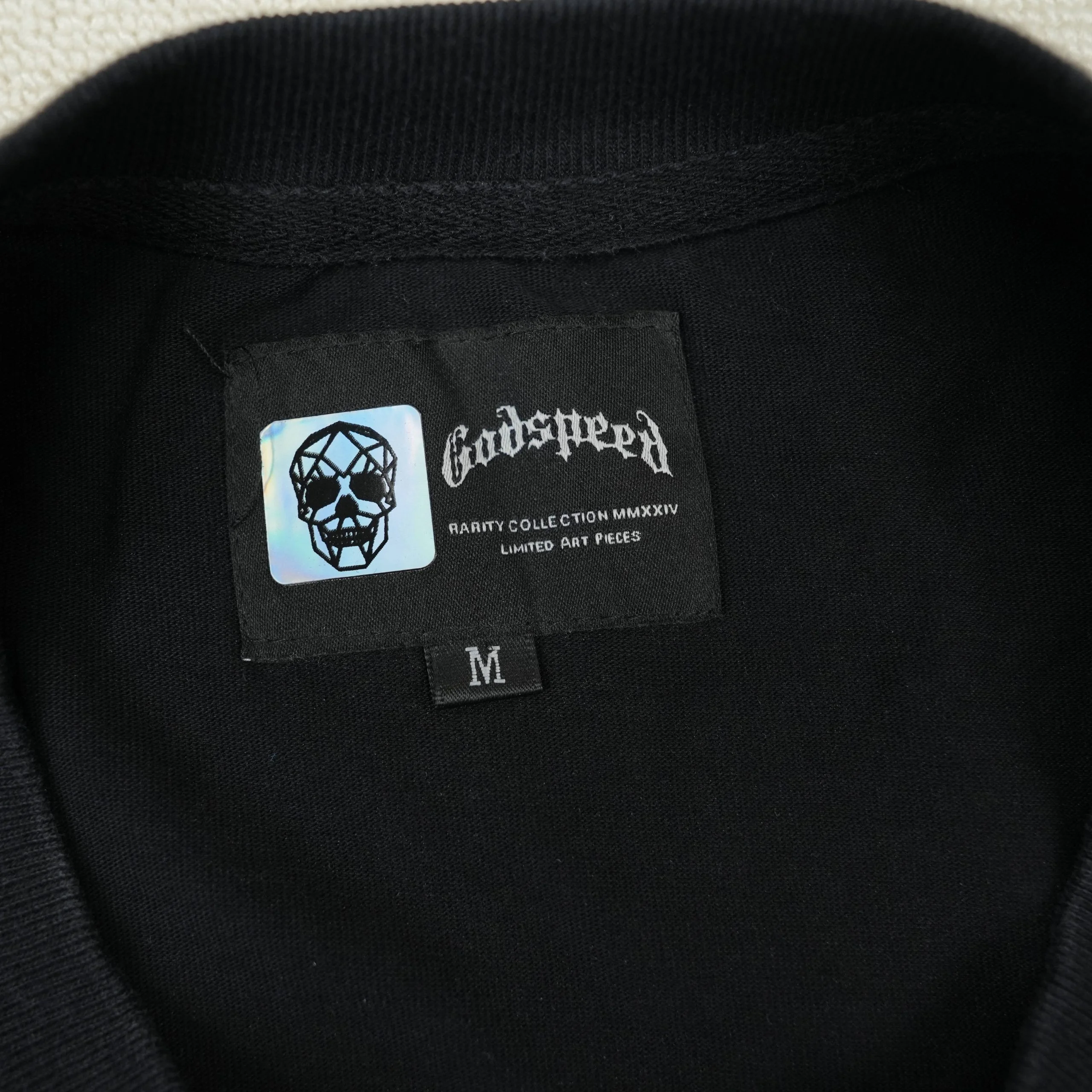
How well the design lasts is the last thing to weigh, too. Given that the word godspeed holds a meaning that spans centuries rather than a fleeting cultural reference, pieces centered on it tend to hold up better over time than designs chasing a momentary trend. Practically speaking, not just sentimentally, a godspeed hoodie or shirt should be regarded as a piece meant to last rather than a single-season purchase, looking ahead to 2026 and beyond.