
Where to Source The Row Bags Without Risk
Locating one of these bags is the easy part; buying one safely takes a little more thought, for reasons that are structural rather than dramatic. There is no external logo, no monogram and no printed hardware, which strips away the visual cues buyers ordinarily rely on to detect a fake. Because counterfeits reported through 2024 and 2025 have been convincing enough to clear a photographic inspection, verification shifts to two things: the channel you buy from and the checks you carry out in your hands. This is a channel-by-channel row bags overview rather than a ranking, because the best choice depends on whether you need a current model, an archive one, or the lowest price available.
A framing note on money first. The Row publishes no master price list, so every figure below is an observed 2026 market price rather than an official quote, and both retail and resale shift. Use the numbers as a sanity check, not as a target.
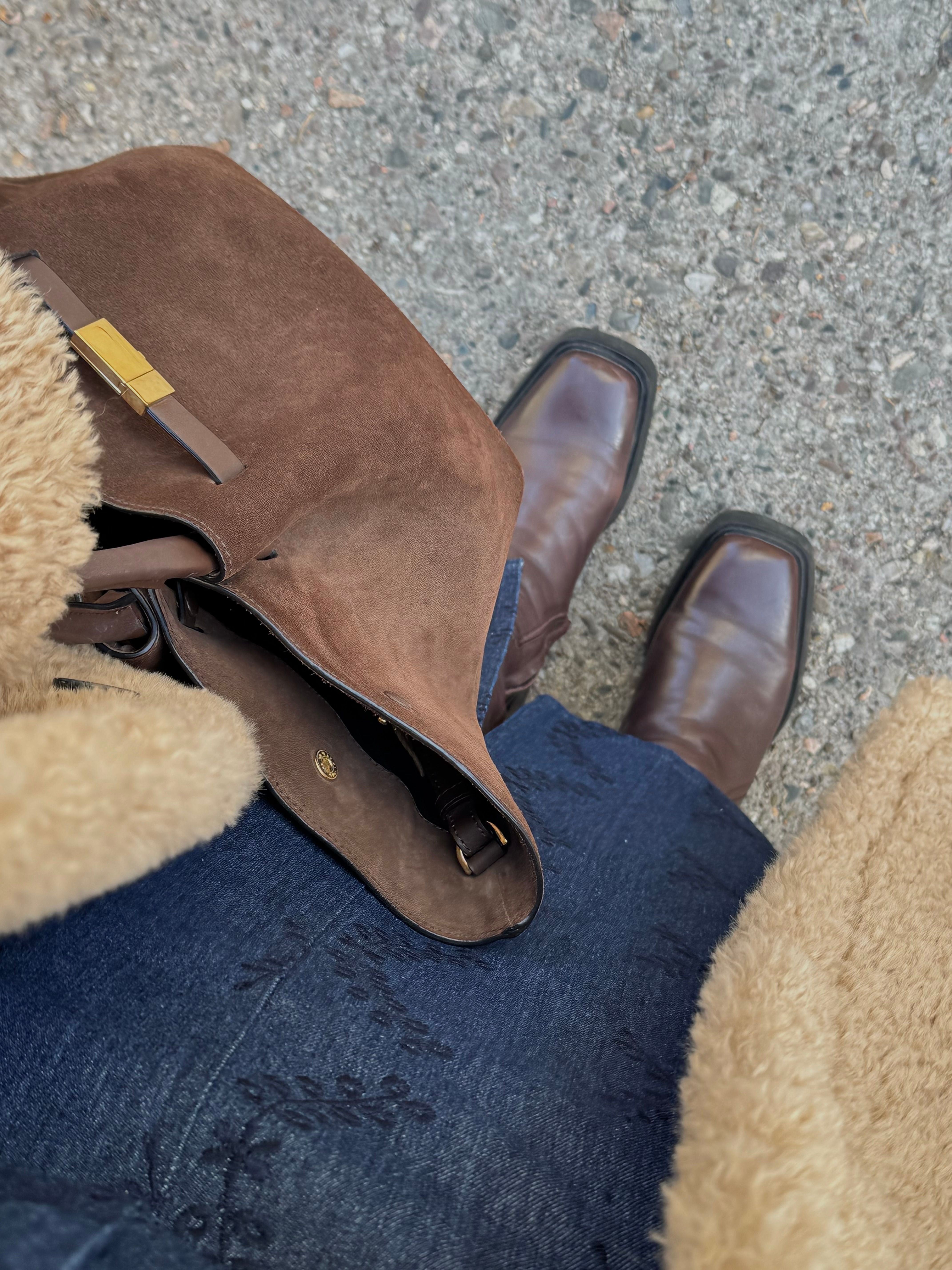
The official channel comes first
The only official channel is the brand’s own website, a point worth stating plainly because it is the single most useful fact in the whole guide. Everything beyond that, no matter how trusted, is a third party shifting stock it has bought or consigned. Alongside the webstore, the brand maintains its own boutiques in Los Angeles, New York, London, Paris and Amagansett, and those carry the same guarantee of provenance. Be aware that at least one website not run by the brand sells under a similar name, so arriving at the official store through a search result rather than through a known bookmark deserves an extra moment of attention. When yves saint laurent the goal is a current-season piece with no authentication question hanging over it, nothing is quicker. In exchange, stock is limited, sizes sell through, and the brand does not discount.
The authorised multi-brand retailers
A tight list of established retailers carries the bags with the brand’s cooperation, so buying from them is practically as safe as buying direct. These are department stores and luxury e-commerce operations with their own returns policies, customer service and, often, physical locations you can walk into. Breadth is the real gain: a colour the official store sold out of sits at one retailer, and a size that never reached your market sits at another. At authorised retailers the prices usually line up with the brand’s own; currency, duties and local taxes explain the differences, not discounting. Seasonal sale periods are the exception, and they are where a genuinely new bag occasionally appears below its usual price. A site you have never heard of showing the current line-up at a discount is a reason to pause, not a reason to hurry.
- Department-store stockists: Bergdorf Goodman, Neiman Marcus, Selfridges, Harvey Nichols, Lane Crawford.
- Luxury e-commerce: Net-a-Porter, Mytheresa, FARFETCH, FWRD, SSENSE, 24S, Moda Operandi, Cettire.
- Independents: A’maree’s and Savannahs, both long-established stockists with small and carefully curated buys.
- Off-price and archive retail: The Outnet, which carries past-season stock below original retail.
The resale market, and what protection each tier offers
There is no single resale market, and treating it as one is how people come unstuck. One end of the range holds platforms that take the bag in, authenticate it in house and photograph the actual item you will receive. In the middle are consignment marketplaces: the platform authenticates, but the item may ship from the seller. At the opposite end sit open marketplaces in which listings come from anyone and the platform’s role is mostly payments and dispute handling. You will find the bags in all of these tiers, on Rebag, The RealReal, Fashionphile, Vestiaire Collective, 1stDibs, Madison Avenue Couture, Future Reference, Poshmark, eBay and Mercari. Searching The Row for sale will return listings from every tier at once, which is exactly why the tier matters more than the search result order.
| Buying channel | What you gain | Main risk |
|---|---|---|
| The brand’s own site and boutiques | Current line-up with guaranteed provenance | Limited availability, no discounts |
| Authorised retail partners | Current season, familiar returns policies | Stock varies from market to market |
| Off-price and archive channels | Past-season pieces below original retail | Limited, unpredictable choice |
| Authenticated resale platforms | Archive models plus in-house authentication and condition grades | Signature silhouettes often cost more than retail |
| Open listing marketplaces | The broadest selection and the lowest asking prices | Highest counterfeit risk, and verification falls entirely to you |
Where the counterfeit risk concentrates
The open marketplaces, Poshmark and eBay in particular, are consistently flagged by sources covering the category as carrying higher counterfeit risk than the authenticated platforms. That reflects how those sites are built rather than a judgement about an individual seller: anyone can list, and no one inspects the bag before it ships. Should you buy there, treat the platform’s buyer protection as your authentication step, and be ready to use it. Ask the seller to photograph the interior stamp, the base, the corners and the hardware for you specifically, not to reuse images from an old listing. Always pay through the platform and never outside it, since an off-platform payment cancels every protection you have. This matters most with the archive models, because Sofia, Devon, Camden and the original Bindle exist only on resale and cannot be cross-checked against a current official listing.
The authentication system that does not exist
The brand runs no public serial number system, no date code and no authenticity card programme. The absence is meaningful in two directions at once. It means no number can be looked up to verify a bag, and equally that any seller offering a serial number, a certificate or an authenticity card as proof is describing something the brand does not issue. Treat that as a strong signal to walk away rather than as reassurance. What the bags do carry is a small, discreet exterior stamp low on the side and an interior stamp reading the logo and Made in Italy. Both should be crisp, correctly centred and evenly pressed, with misaligned letters, smudging or ragged edges counting as red flags.
In-hand checks worth making
Photographs no longer settle the question, so the checks that matter are physical and structural. Genuine hide feels substantial and soft at once, absorbing light rather than bouncing it back, while fakes tend to feel stiff, thin or faintly plasticky. Real suede is evenly coloured with no plastic sheen. Stitching should be machine-precise with even density, no fraying and no wandering lines, and hand-painted edges should show no overflow, bubbling or thin coverage. Hardware is palladium-plated with a matte or brushed finish, solid in the hand and smooth at the edges, and on the Margaux the buckles and base feet are engraved. A real bag also stands up empty and regains its form after use, which inferior constructions rarely do.
- Look at the interior stamp first, judging centring, crispness and even pressure.
- Trace the painted edges with a finger, checking for ridges, bubbling or bare patches.
- Open and close each fastening a few times and listen for a precise action instead of a loose one.
- Stand the bag empty on a flat surface and see whether it holds its own shape.
- The dust bag, care card and box corroborate; they never prove anything on their own.
Price is the first filter to apply
Nothing screens faster than price, and it costs nothing to use. A major resale authenticator places new Margaux bags in the $5,000 to $9,000 range on the secondary market, so a listing in the hundreds is almost certainly counterfeit no matter how good the photographs look. Elsewhere in the range, observed 2026 market prices start around $590 for a Double Travel Wallet and $900 for a Boone Tote and climb to $1,390 for a Half Moon and $4,350 for a Soft Margaux 12. A price far under the band for that model means damage, a misdescription or a fake, and the listing rarely says which of the three. Supply is part of the picture too. Reports in 2025 widely described the original Margaux being pulled from third-party retailers, a change the brand has never officially confirmed. Fewer new units in circulation means more resale listings competing for the same buyers, and prices above retail on the signature silhouettes are normal rather than suspicious.
A short routine to run before paying
Buying well is mostly a matter of sequencing, and the sequence is short enough to remember. First settle whether it is a current model or an archive one you want, because that single answer clears most of the channels away immediately. Current pieces should come from the brand or an authorised retailer, and archive pieces from a platform that authenticates in house and photographs the actual item. Go through the condition description line by line and ask for more images of whatever the listing describes but does not show. Check the return window before you pay, then inspect the bag against the checks above the day it arrives, not a fortnight later. Follow that routine every time and buying The Row bags becomes a low-risk exercise rather than a gamble.